

Sinking Funds for Expenses You Know Are Coming
Annual and seasonal bills are easier to handle when you set money aside ahead of time. Learn how to build small savings pots into a budget.
By CreditCardDebt Staff3 min read
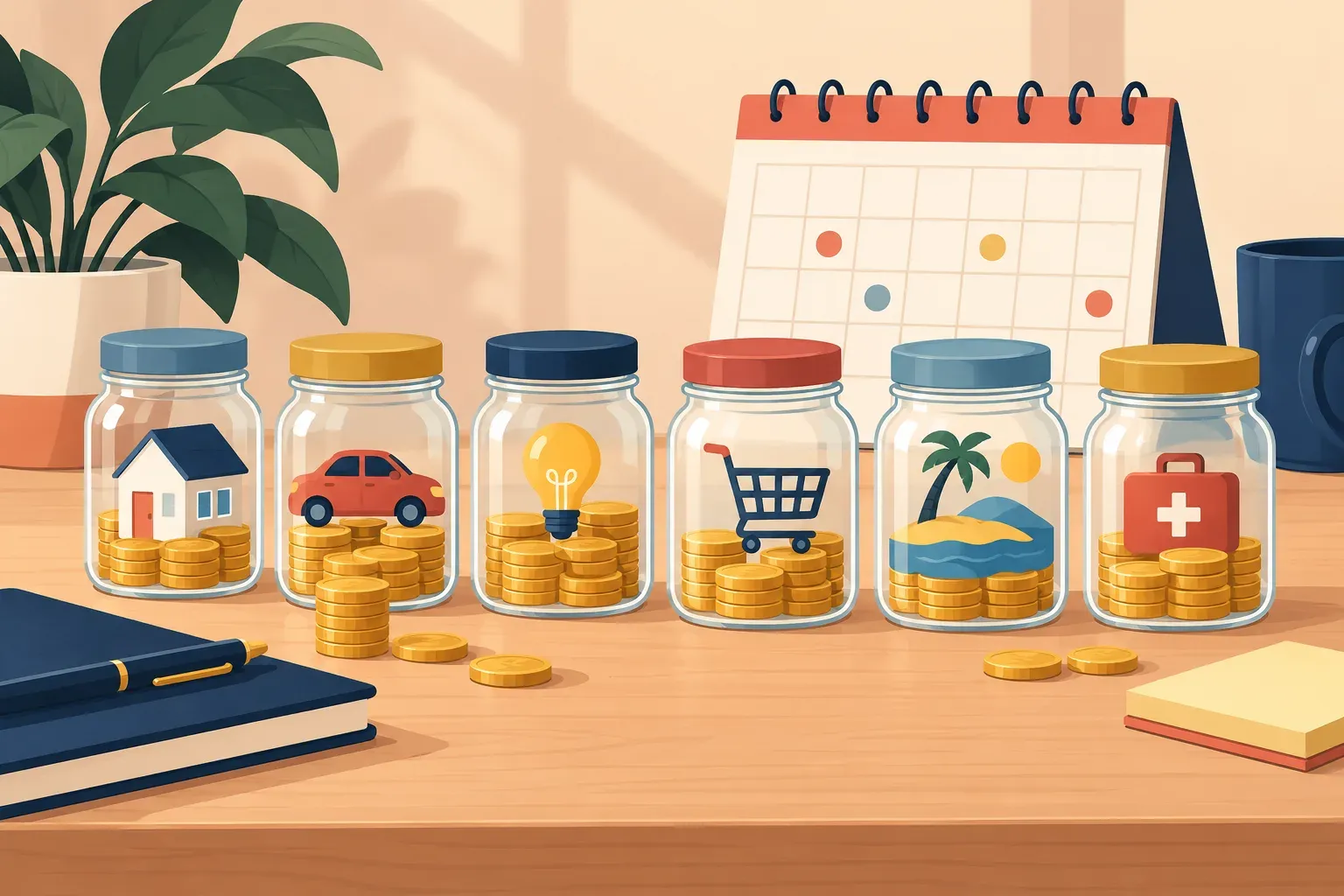
A sinking fund is money you set aside, a little at a time, for a bill you know is coming but that doesn’t show up every month: the car insurance renewal, holiday gifts, back-to-school costs. Instead of a $900 surprise in March, you save $75 a month starting the previous April. It’s one of the simplest ways to stop predictable expenses from landing on a credit card.
Find the bills that break your monthly budget
Pull up the last 12 months of bank and card statements and look for anything that isn’t monthly. Most households find a list like this:
- car insurance, if paid every six or twelve months
- car registration and inspection
- annual subscriptions and memberships
- holiday and birthday gifts
- school supplies, fees, and activities
- vet visits and pet medications
- property taxes or homeowners insurance, if not included in a mortgage payment
- travel for a yearly trip or family event
- routine car maintenance, such as tires and brakes
Write each one down with roughly when it’s due and what it cost last time. If a bill keeps going up, use the newest figure or a current quote, not what you hope it’ll be.
Do the math once
For each item, divide the cost by the number of months (or paychecks) until it’s due:
| Expense | Cost | Due in | Monthly set-aside |
|---|---|---|---|
| Car insurance | $900 | 12 months | $75 |
| Holiday gifts | $600 | 10 months | $60 |
| Car registration | $180 | 6 months | $30 |
| Annual software subscription | $120 | 8 months | $15 |
That’s $180 a month for four bills that would otherwise blindside you. If the total is more than you can manage right now, start with the bill most likely to end up on a credit card and add the others later. Starting late is fine; just catch up with part of a tax refund or a better-than-usual month.
Where to keep the money
You don’t need a separate account for every fund. One savings account plus a simple spreadsheet works, as long as you can tell how much of the balance is already spoken for. Many online banks also let you create labeled “buckets” inside one account, which makes it easier to see.
Keep the money somewhere safe and easy to reach. A bill due in eight months isn’t a reason to invest in stocks, which can drop right when you need the cash.
Keep it separate from your emergency fund
Sinking funds are for things you can see coming. An emergency fund is for things you can’t, like a job loss, a medical bill, or a transmission that dies. Mixing them hides the truth: you might think you have $3,000 of emergency savings when $1,400 of it is earmarked for insurance in two months. Emergency Savings or Extra Debt Payments covers how to size and fund that separate cushion.
If your income varies, put more into sinking funds in strong months and less in lean ones. How to Budget With Irregular Income shows how to fit this around uneven pay.
Adjust after each bill
When a bill comes due, compare what you saved with what it cost. If you came up short, raise the monthly amount for next year. If you had extra, roll it forward or move it to another goal. After a year or two, most people find their estimates get pretty accurate, and the “unexpected” annual bills simply stop being unexpected.
If you’re carrying expensive credit card debt at the same time, start small. Creating a Personalized Budget can help you balance these set-asides against debt payments.
Sources
- CFPB: Assess your spending
- FDIC: Money Smart for Adults
- FDIC: Saving for the unexpected and your future
This article is for educational purposes and is not financial advice.