

How to Budget With Irregular Income
A monthly budget can still work when pay varies. Plan around essential bills, the timing of cash coming in, and a cushion for slower periods.
By CreditCardDebt Staff3 min read
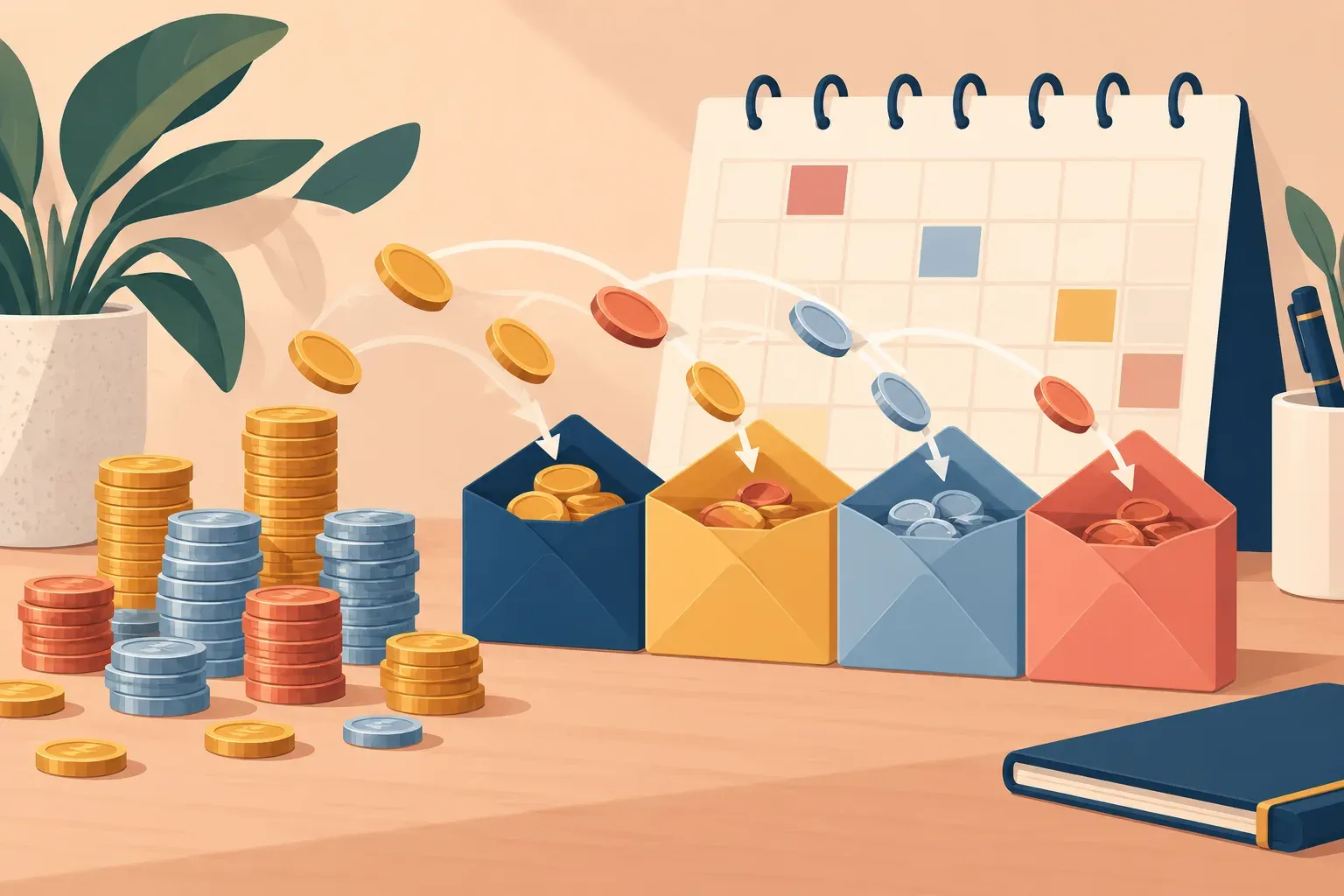
If your pay changes from month to month, budget around your lean months, not your average. Cover essential bills from the income you’re fairly sure of, and treat anything above that as money with a job assigned in advance: refilling a buffer, covering next month’s gap, or paying down debt.
Start with a calendar, not a monthly total
A normal monthly budget asks whether income covers expenses over the month. With irregular pay, the harder question is whether the money is there on the day the bill is due. A $3,000 month doesn’t help much if $2,400 of it lands on the 28th and rent was due on the 1st.
So lay it out by date. Write down every expected payment with the day you think it will arrive, and mark which ones are confirmed (an invoice that’s been approved, a scheduled shift) and which are hopeful. Then list your fixed bills next to their due dates: rent or mortgage, utilities, insurance, phone, car payment, card minimums. Food, gas and other day-to-day spending go in as weekly amounts.
Seeing the two lists side by side usually shows one or two tight weeks every month. Those are the weeks to plan around. Creating a Personalized Budget covers the expense categories in more detail.
Find your baseline number
Look back over the last 12 months of deposits and find the lowest two or three months. That’s a realistic floor. If your leanest months brought in $2,600, $2,800 and $2,900, plan your fixed costs around something close to $2,600 rather than the $3,400 average.
Everything essential should fit inside that baseline. If it doesn’t, that’s useful to know now: you may need a cheaper phone plan, a roommate, or a conversation about moving a due date. Some billers will move your due date if you ask; it costs nothing to call.
Pay yourself a steady “salary”
One approach that works for many freelancers and commission earners is a holding account. All income goes into a separate savings account first. Each week or month, you move a fixed amount, your baseline, into checking and live on that. In a good month the holding account grows; in a slow month it tops up the difference.
Building that cushion takes time. A reasonable first target is one month of baseline expenses sitting in the holding account, then two. Keep it apart from your emergency fund, which is for surprises such as a broken laptop or a medical bill rather than an ordinary slow month.
When a big payment arrives, decide where it goes before you spend any of it. A simple order: fill any shortfall in the next few weeks of bills, top up the holding account, set aside money for known upcoming costs (see Sinking Funds for Expenses You Know Are Coming), then put extra toward high-interest debt.
Don’t forget taxes
If you’re self-employed or paid as a contractor, nobody is withholding tax for you. The IRS generally expects quarterly estimated payments if you’ll owe $1,000 or more for the year. A practical habit is to move a fixed percentage of every payment into its own tax account the day it arrives, so the quarterly bill doesn’t end up on a credit card. The right percentage depends on your income, deductions and state, so use the IRS worksheet or ask a tax preparer to set it the first year.
Check in every time money moves
Update your calendar whenever a payment arrives, a client pays late, or a bill changes. Look ahead three or four weeks, not just to the end of the month. If you can see a shortfall coming, cut optional spending first and call creditors before the due date, when you have the most options. What to Ask for When You Can’t Make a Card Payment has a script for card issuers, and Mastering Your Money covers the longer-term plan once your cash flow is steady.
Sources
- CFPB: Your Money, Your Goals toolkit (cash flow budgeting)
- FDIC: Money Smart for Adults
- IRS: Estimated tax FAQs
This article is for educational purposes and is not financial advice.