

Emergency Savings or Extra Debt Payments: How to Decide
Savings and debt repayment can both protect your finances. Choose a split based on the cost of debt and your exposure to surprise bills.
By CreditCardDebt Staff3 min read
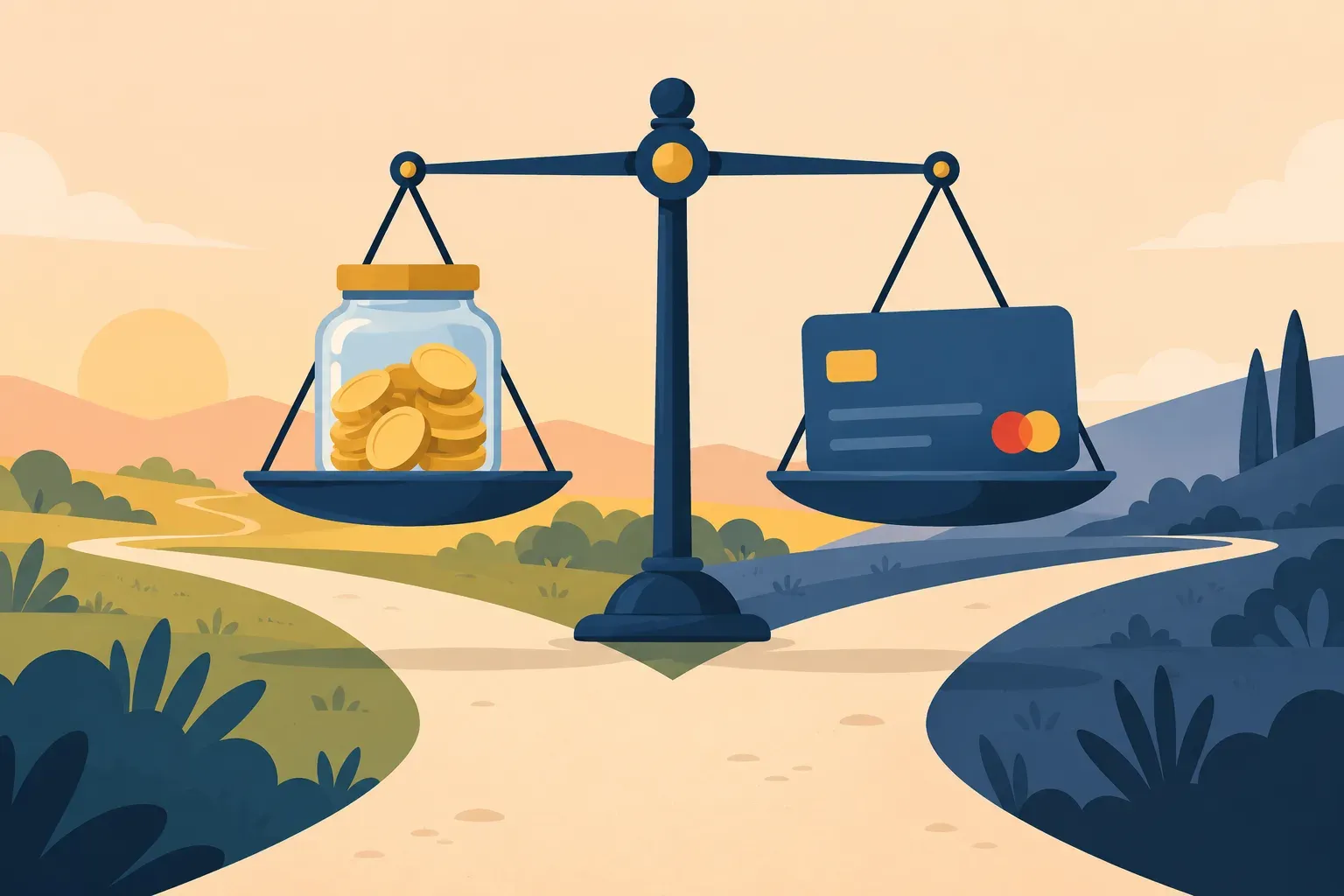
For most people carrying credit card debt, the answer is “both, in order.” Build a small cash cushion first so the next car repair doesn’t go straight onto a card, then send everything extra to your highest-interest debt. Once that debt is gone, go back and build savings up to a full emergency fund.
Why not just pay off the debt first?
On paper, paying down a card charging around 22% beats almost any savings account. That’s roughly the average rate on credit card accounts paying interest, according to the Federal Reserve. The problem is real life. If every spare dollar goes to the card and then the car needs $700 of work, the $700 goes right back on the card. You’re back where you started, and probably discouraged.
That’s common. In the Federal Reserve’s latest survey of household finances, 63% of adults said they could cover an unexpected $400 expense with cash or its equivalent. Among those who couldn’t, the most common fallback was putting it on a credit card and carrying the balance.
A starter cushion breaks that cycle.
How much for a starter cushion?
There’s no single right number. Think about the surprises you’re actually exposed to:
- an older car, or a long commute
- a deductible on your health or car insurance
- pets, kids, or a home you own
- a job with uneven hours or commission pay
For many households, something in the range of one month of essential expenses is a reasonable first target. Even a smaller amount helps; the FDIC notes that even a small emergency fund can help absorb unexpected costs. Keep it in a separate savings account you can get to within a day or two, but not one tied to your debit card.
Money for bills you know are coming, like annual insurance or holiday gifts, is a different pot. Sinking Funds for Expenses You Know Are Coming explains how to set that up.
Then go after the debt
Once the cushion is in place:
- Keep paying every minimum on time. A missed payment adds fees and can hurt your credit; What Happens After a Missed Credit Card Payment? explains why.
- Put every extra dollar toward the debt with the highest interest rate.
- Leave lower-rate debts, like a car loan at 7%, on their regular schedule for now.
If you dip into the cushion, pause extra debt payments and refill it first.
A split you can stick with
Some people prefer to split extra money, for example 20% to savings and 80% to debt, rather than doing one at a time. That’s fine. It’s slower on paper, but a plan you’ll actually follow beats a perfect one you abandon in month three.
Windfalls such as a tax refund, bonus, or side-job payment are a good time to make a big move on either goal. Decide where the money goes before it hits your account.
When to lean toward savings
Tilt toward cash if your income is unpredictable, your job feels shaky, or you have no access to other credit in an emergency. How to Budget With Irregular Income covers planning around uneven pay. Tilt toward debt if your income is steady, your cushion is in place, and the interest is piling up month after month.
And if you can’t cover essentials and minimums at all, call your creditors about hardship programs before you drain the emergency fund to stay current.
Sources
- Federal Reserve: Economic Well-Being of U.S. Households in 2025
- Federal Reserve: G.19 Consumer Credit
- FDIC: Saving for the unexpected and your future
- FTC: How to get out of debt
This article is for educational purposes and is not financial advice.