

How Credit Card Payments Are Applied to Different Balances
One card can hold purchases, transfers, and cash advances at different rates. Learn how payments are allocated and where to look for surprises.
By CreditCardDebt Staff2 min read
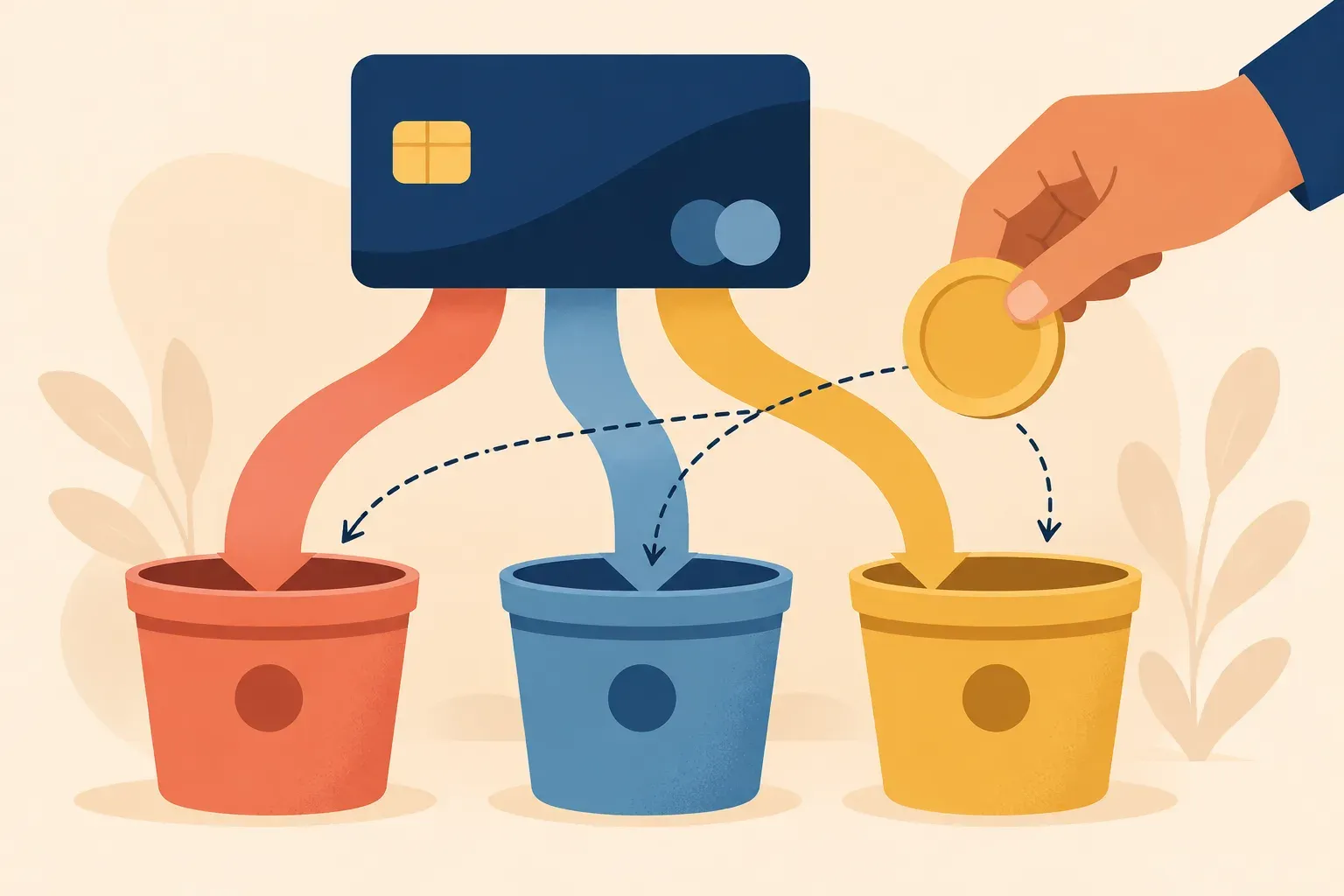
If your card has balances at different interest rates, such as regular purchases, a cash advance, and a promotional balance transfer, your payment isn’t split evenly among them. Federal rules require the issuer to apply anything you pay above the minimum to the highest-rate balance first. The minimum payment itself can go wherever the issuer chooses, and it usually goes to the lowest-rate balance.
An example
Say your card has three balances:
| Balance | Amount | APR |
|---|---|---|
| Balance transfer | $3,000 | 0% (promo) |
| Purchases | $1,000 | 22% |
| Cash advance | $500 | 29% |
Your minimum is $90 and you pay $400.
The issuer can apply the $90 minimum to the 0% transfer, and many do. The remaining $310 must go to the highest-rate balance first, so the cash advance drops from $500 to $190. The purchase balance doesn’t move at all this month.
For interest costs, this works in your favor: you’re paying down the most expensive debt first. It just means the balance you were watching may not move the way you expected.
Where to look on your statement
Your statement breaks out each balance type with its own APR. Find:
- purchases
- balance transfers, and the date any promo rate ends
- cash advances, which usually carry a higher rate and no grace period
- any deferred-interest promotional purchases
The card agreement explains how the issuer handles the minimum. If a promo is involved, How Credit Card Grace Periods Work explains why new purchases may be collecting interest too.
The deferred-interest exception
Deferred-interest promotions, the “no interest if paid in full in 12 months” kind, get special treatment. During the last two billing cycles before the promotion expires, the issuer must apply the amount above your minimum to the deferred-interest balance first, so you have a fair chance to clear it before back-interest kicks in.
Outside those two cycles, you can ask the issuer to direct extra payments to the deferred-interest balance, and it can agree. Get the confirmation in writing or in a secure message. Don’t count on two cycles being enough to pay off a large promo balance; plan to finish early. Deferred Interest vs. a True 0% APR Offer has the details.
Simplify if you can
Mixed balances are where people lose track. A few habits help:
- Don’t take cash advances on a card where you’re carrying a promo balance.
- Keep new purchases on a separate card from a balance transfer.
- Each month, compare the balances on this statement with last month’s, after accounting for new charges and interest.
If a payment seems to have been applied incorrectly and the issuer’s explanation doesn’t match the rules, treat it as a billing error. How to Dispute a Credit Card Billing Error explains the written notice and the 60-day deadline. And if you’re still deciding whether a promo transfer makes sense at all, Is a 0% Balance Transfer Worth It? runs the numbers.
Sources
- Federal Reserve: Regulation Z, allocation of payments (12 CFR 1026.53)
- Experian: Balance transfer vs. cash advance
- FTC: Using Credit Cards and Disputing Charges
This article is for educational purposes and is not financial advice.